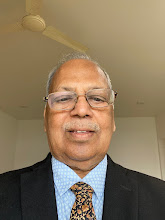
Leadership Tweets by T. V. Rao
I am putting together my tweets on Leadership.
•Leadership is
contextual
•Successful leadership
always emerged in response to situations. Either successful leaders thought
ahead, communicated ahead their views opinions, ideology etc, acted ahead of others.
•The most critical quality of leadership is thus initiative
in thinking, communicating and acting and or combination of all the three.
•The success depending however on how it clicks. Some or
lucky in terms of the context that it cliques and they become acknowledged
leaders. It does not mean other times they are not.
•The context of leadership is the country where you live, the
global context, context of the place where you work (the organization),
the local and outside conditions
prevailing at the time you lead, your department etc. (CEO, culture, your immediate boss, business
situation, local issues – by city, state etc. ), attitudes prevailing to people
of your age group, gender and other background factors and so on . There are
innumerable contexts that determine your acknowledged success
•Normal Probability
may cripple Leadership Talent
•Acknowledged success defines your leadership impact it may
not define your leadership quality or competence.
Most organizations need to
create conditions to promote leadership competence and not necessarily merely
acknowledge success.
Some organizations cripple leadership competence through
their performance appraisals systems. Particularly the normal curve. Normal
curve cripples leadership and specially certain types of leadership (by
thought, word or deed)
•Western Theories and Theorists are
not always
•Competency Models need
to be constantly reviewed and revised for contextual relevance of
Leadership lessons
•Leadership lessons from past are building blocks
•There is a lot one
can learn from leadership lessons from the past.
•Our own Vedic
literature and epics like Ramayana and Mahabharata have given us many
leadership lessons
•Great leaders and
Management Gurus including kings and their ministers and wise people have given
us a lot of wisdom (Lord Buddha, King Ashoka, Chanakya, Tenali Rama, Srikrishna Devaraya and many)
•Recent times
Management thinkers and philosophers, CEOs etc. like Peter Drucker, Noel Tichy,
Ram Charan, Jack Welch, Lee Iacocca, C K Prahalad, Govindarajan etc. have given
us a lot of wisdom
•All wisdom of the
past is relevant but has limitations.